WHAT IS CEREMONIAL GRADE MATCHA?
“Ceremonial grade” is a term that was popularized in Western markets as a simple way to distinguish drinkable matcha from the so-called “culinary grade” matcha intended for cooking and baking. “Ceremonial grade” sounds reassuring but it is not an officially regulated Japanese quality classification. There is no universal standard defining exactly how a matcha must be grown, harvested, processed or taste before it can be called or labelled “ceremonial grade”.
Two matchas carrying the same term can therefore differ significantly in quality and taste. Which makes buying genuinely good matcha slightly more complicated, sometimes frustrating, and, in our humble opinion, more interesting. Because once you stop relying on the words on the front of the tin, you start looking at what actually matters: the tea itself.
So, is it a useful shorthand? Yes. A guarantee of quality? No.
What DETERMINES THE QUALITY OF MATCHA?
The quality of matcha is determined by a combination of factors, starting with the raw tencha leaves and continuing through cultivation, harvest, processing, milling, freshness, and storage. No single specification guarantees an exceptional matcha. What matters is how all of these factors come together.
TENCHA
Tencha is the shaded green tea leaf material made from Camellia sinensis that is specifically processed to become matcha. After harvest, the leaves are steamed, dried without rolling and refined before being ground. Unlike most green teas, matcha is consumed as the whole powdered leaf rather than steeped and removed. That makes the tencha quality especially important.
SHADING & HARVEST
Matcha tea plants are shaded before harvest to reduce direct sunlight and shape the flavour profile. Shading helps preserve amino acids such as theanine, contributing to deeper green colour, more umami and less aggressive bitterness. First-harvest, or ichibancha, uses the plant's tender first spring growth and is commonly associated with higher-quality tea.
CULTIVAR
The cultivar (cultivated variety of Camellia sinensis) influences the matcha's umami, sweetness, bitterness, aroma, colour and mouthfeel as different cultivars vary in their levels of amino acids, catechins, aromatic compounds, chlorophyll. Single-cultivar matcha is not automatically superior. Tea masters may blend cultivars or lots to combine strengths such as the umami of one tea with the sweetness or aroma of another.
ORIGIN
Where matcha is grown influences how the tea develops and tastes. Soil, rainfall, temperature, altitude and day-night temperature differences all matter. Uji in Kyoto, Nishio in Aichi and Yame in Fukuoka are established shaded-tea regions with different growing conditions and traditions.
MILLING
Traditional high-quality matcha is often slowly ground between granite stones, with one mill producing only around 40 grams per hour. That slow pace keeps the heat low while creating an exceptionally fine powder, preserving the tencha's aroma and flavour and giving the matcha its smooth, almost creamy texture. Industrial milling is much faster, but if heat is not carefully controlled it can affect aroma and contribute to harsher notes.
FRESHNESS
Even excellent matcha can become disappointing if it is badly stored. Once ground, its large surface area makes it especially vulnerable to oxygen, light, heat and moisture, which can dull its colour, aroma and flavour. Freshness therefore also depends on packaging and temperature control throughout production, warehousing, transport and storage, not just after you open the tin.
How can you tell if matcha is high-quality?
High-quality matcha is best identified by a combination of vivid colour, fresh aroma, fine texture, smooth mouthfeel, balanced flavour and transparency about the tea’s origin and production. No single characteristic proves quality on its own. Here is what to look for:
Color
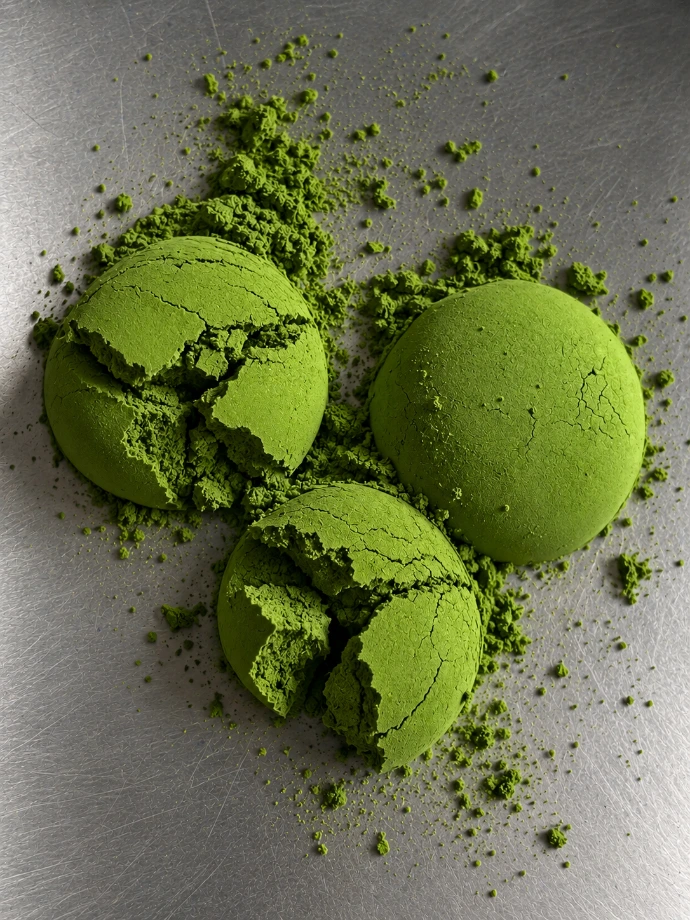
A vivid, fresh green rather than a dull, yellowish or brown colour
Aroma
A fresh, clear and distinctive aroma, often with sweet, vegetal, creamy or savoury notes rather than a flat or stale smell
Texture
A very fine powder that produces a smooth, soft and almost creamy mouthfeel rather than a coarse or gritty texture
Taste
Balanced umami, natural sweetness and complexity, with no or minimal bitterness and astringency
Transparency
Information about origin, cultivar, harvest, producer or production method
CEREMONIAL vs. CULINARY MATCHA: WHAT'S THE DIFFERENCE?
“Ceremonial” and “culinary” are primarily Western market terms used to distinguish matcha meant for drinking from matcha intended for cooking, baking or mixing. Some Japanese producers have now adapted this terminology because it is easier to understand and sell internationally. But as there is no official definition or universal quality standard behind either label, they do not actually reveal more than the intended use of the matcha.
In practice, ceremonial matcha is more likely to be made from higher-quality tencha, often from first-harvest or other early-season leaves, because these tend to offer more sweetness, umami and refinement. Culinary matcha may use later harvests or stronger-flavoured material, where more bitterness, astringency and intensity can actually be useful once the matcha is combined with milk, sugar, chocolate or other ingredients.
In the cup, that difference is usually quite noticeable. Ceremonial matcha tends to taste smoother, sweeter and more umami-forward, with bitterness and astringency kept in balance. Culinary matcha is often more robust, more bitter and more astringent, with less sweetness and nuance. Drunk with water alone, it can therefore taste harsher or flatter, while those stronger notes help it remain noticeable once other ingredients are added.
HOW DOES KOKUMAMI SELECT MATCHA?
The absence of a universal ceremonial-grade standard is one of the reasons KOKUMAMI exists. We want KOKUMAMI to stand for matcha that has already passed a very picky taste test. So when you see our name on a tin, you should not have to wonder whether it is actually good.
So far, we have tasted more than 200 first-harvest Japanese matchas from over 40 farmers, producers and suppliers. The specifications help us understand the potential of a tea: origin, harvest, cultivar, colour and production. But they are still only part of the picture.
Our final decision happens in the cup. We look for umami, natural sweetness, aroma, a smooth mouthfeel, low and controlled bitterness and a clean, lingering finish. And all of those need to be beautifully balanced. That is where our selection really happens.
FREQUENTLY ASKED QUESTIONS ABOUT CEREMONIAL MATCHA
Is ceremonial grade matcha the highest grade?
Not officially. “Ceremonial grade” is a Western-popularized term commonly used for higher-quality matcha intended for drinking, but there is no universal Japanese grading system that defines it as the highest grade. Producers and suppliers may use their own quality categories.
Is ceremonial matcha supposed to be bitter?
A little bitterness and astringency are completely natural in matcha. In high-quality matcha, they should sit in balance with umami, natural sweetness, freshness and a smooth mouthfeel rather than dominate.
Why is ceremonial matcha expensive?
High-quality matcha is expensive because it takes more care to produce. Shading, premium tencha, selective harvesting, careful refining, slow and fine milling, proper storage and limited production all add time and cost. Cultivar, producer reputation, scarcity and demand can push prices higher still.
Can ceremonial matcha be used for a latte?
Absolutely. Delicate, high-quality ceremonial matcha is especially well suited to usucha or koicha, where its aroma, umami and finer flavour notes can be appreciated on their own. It can still make an excellent latte, but you may need to use a little more matcha so the flavour remains noticeable once milk, sweeteners or other flavours are added.
Is first-harvest matcha better?
First-harvest matcha is often associated with higher-quality Japanese tea because the first spring growth can offer especially desirable flavour characteristics. But first harvest alone is not a guarantee of quality. Cultivar, growing conditions, shading, processing, freshness and, ultimately, taste still matter.