I just wanted better matcha.
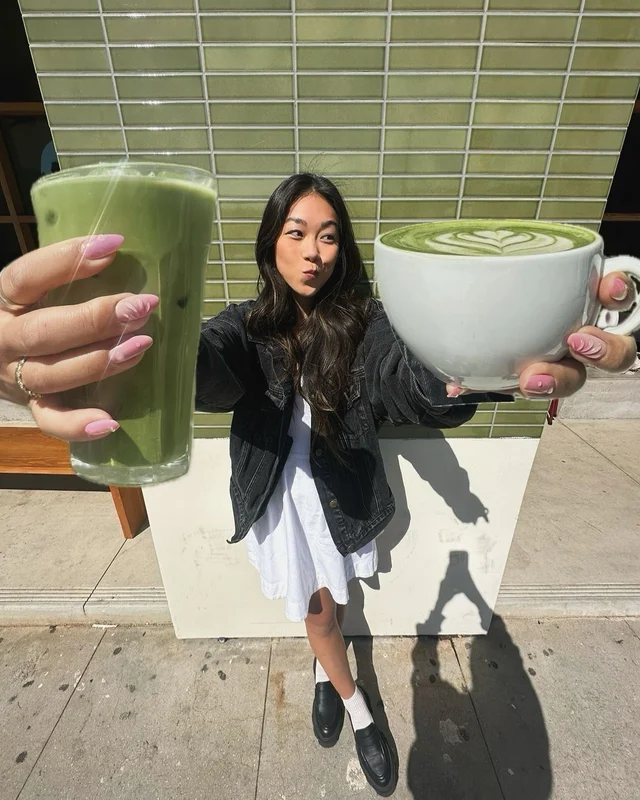
Hi, I’m Laura, founder of KOKUMAMI. Matcha had been part of my drink repertoire for years, long before it became such a huge trend in Europe. I consumed it regularly while living in Asia, so when I moved back to Switzerland, I assumed I would just keep doing the same. Instead, I kept buying matcha and being disappointed. A lot of what I got my hands on was either too bitter, too grassy, too earthy or left that dry, astringent aftertaste I really dislike. And I’m not someone who wants to fix bad matcha by drowning it in syrup or sweeteners. I actually like the taste of matcha, and I just want it to taste really good.
At some point, my thinking was basically: It cannot be this hard to import super good matcha from Japan. I started questioning the matcha brands already on the market and decided to test my assumption. I began reaching out to producers and suppliers in Japan and ordering wholesale samples with a very simple hypothesis: This should be easy. Why aren’t more brands just sourcing better matcha?
Then the samples started arriving. And a few dozen supposedly high-quality, “imperial ceremonial” matcha later, I had my answer: Apparently, it really is that hard. Some were again a little too bitter and or too astringent, some lacked depth and umami, completely disappeared in milk, and some were simply... just okay. The harder it seemed to find the kind of matcha I had in mind, the more determined I became to find it. So yes, here we are.
Then I started taking it a little too seriously.
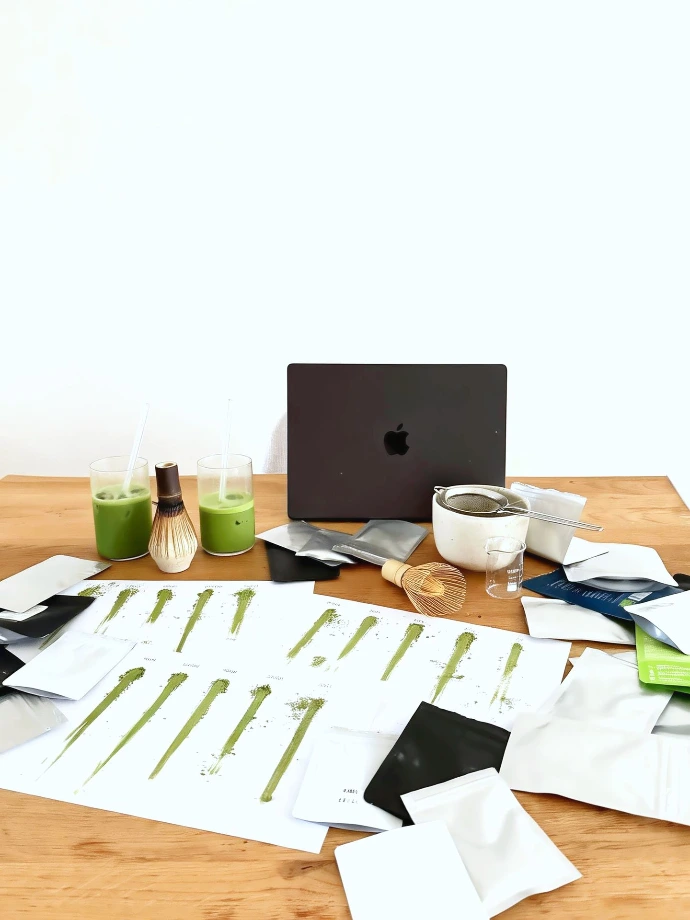
At first, that mostly meant ordering even more, a lot, more matcha. Up to the point where half of my fridge was storing matcha samples. The more I tasted, the more questions I had. Why did one matcha taste rich, creamy and almost broth-like, while another mostly tasted green, but both had the same level of aroma and that great bright green color? Why could two matcha from Japan, both sold as high quality, taste completely different in the bowl?
That’s when my tasting became less casual and much more systematic. I don’t judge a matcha from one bowl. If I think it has potential, I test it as usucha, koicha, in lattes and sometimes even cocktails. I play with different water temperatures, ratios and types of milk because a matcha can be beautiful in one preparation and then behave completely different in another.
I look at colour, aroma, freshness, umami, sweetness, bitterness, astringency, aftertaste and even how the matcha settles after 15 minutes. Somewhere around here, my curiosity probably started turning into obsession.
The more I learned, the more I cared about who was making it.
Once I finally found matcha that genuinely impressed me, I wanted to know who was behind it. I wanted to meet the people making it, understand how they worked and, quite honestly, applaud them for creating something that had stood out after so many disappointing samples. So I flew to Japan.
There, I met producers and family-run tea businesses and got to see much more of what happens behind the scenes. The more I saw, the more I understood how much of the final taste comes down to decisions most customers will never see: how the plants are shaded, when the leaves are harvested, which leaves are selected, how the tencha is processed and sorted, how carefully it is milled, and how producers and tea masters work toward a certain flavour profile while trying to keep the quality consistent. That was when “craftsmanship” stopped feeling like a marketing word.
And then there’s the human side of it. Some of the producers I met come from families that have been working with tea for generations, and you can feel how proud they are of what they make. Their knowledge, reputation and often their family name sit behind the product. And as I understood that, the more attached I became to the people behind the matcha too. They care about tiny details because those details are the product. And because I care about details, too.
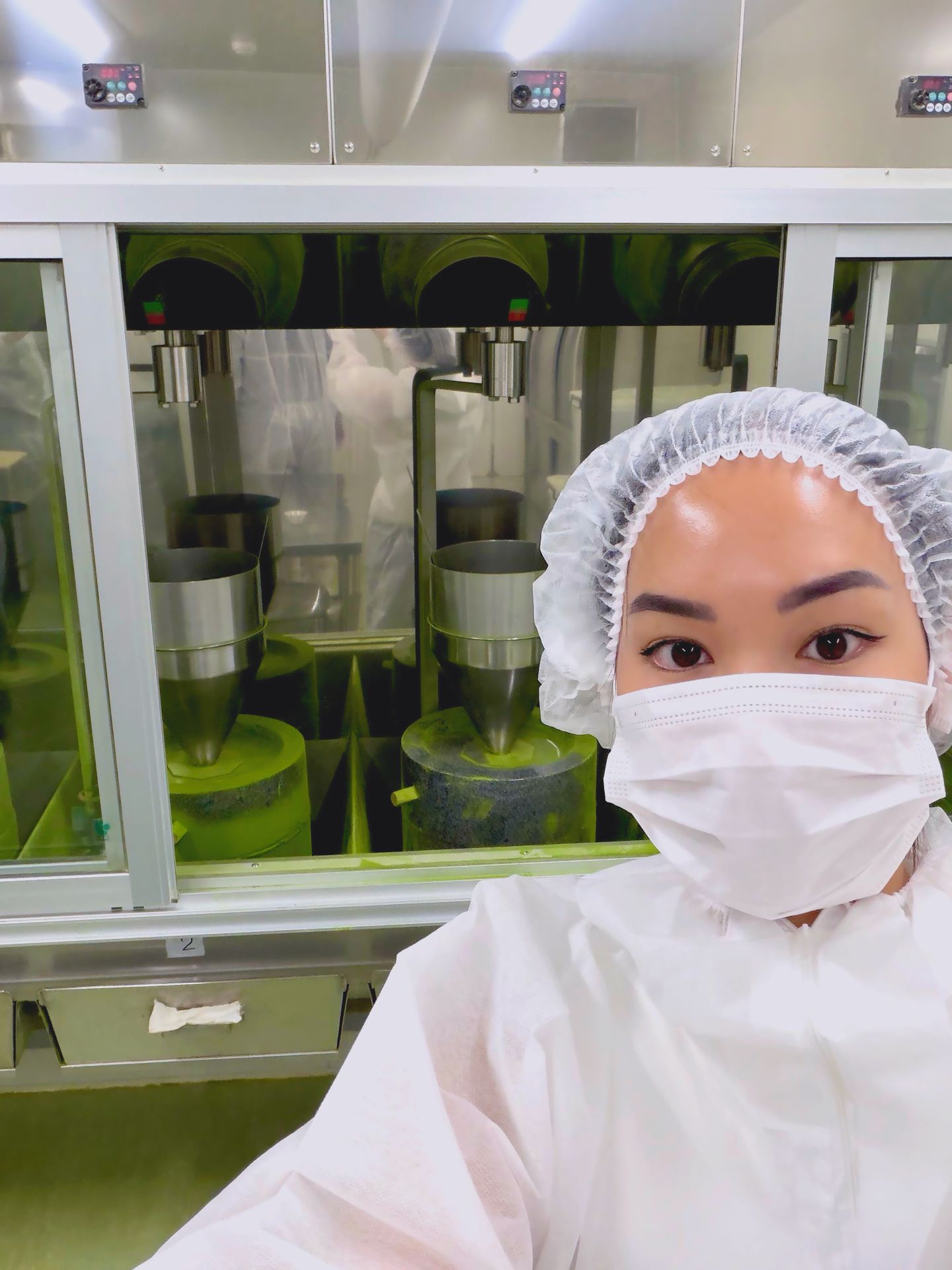
Somewhere along the way, this became my dream job.
At some point, I realised I had accidentally created my dream job: matcha taster.
As of today, I’ve built relationships with more than 40 farmers, producers and suppliers and have tasted and evaluated over 200 different first-harvest Japanese matcha. Writing this I realise that sounds (slightly) excessive, because it is. But I genuinely love it!
Opening a new matcha still feels a little bit like opening a present. Sometimes it’s disappointing. Sometimes it’s very good. And every now and then, I taste one and immediately think: this could be it.
Those are the fun moments. The less fun ones usually come a little later.
Not every matcha I love makes the cut.
Taste is only one part of the decision. I’ve found matcha I genuinely loved and still had to let go because the testing, documentation or regulatory fit wasn’t right for Switzerland and the EU. Those are heartbreaking.
It also means the final KOKUMAMI line-up is intentionally small. I would rather offer a few matcha I completely believe in than fill the shop with options just for the sake of having more choice. The ones that make it through have survived the tasting, comparing, re-tasting, different preparations, compliance checks and, admittedly, quite a lot of overthinking. They are the ones I am obsessed with myself.
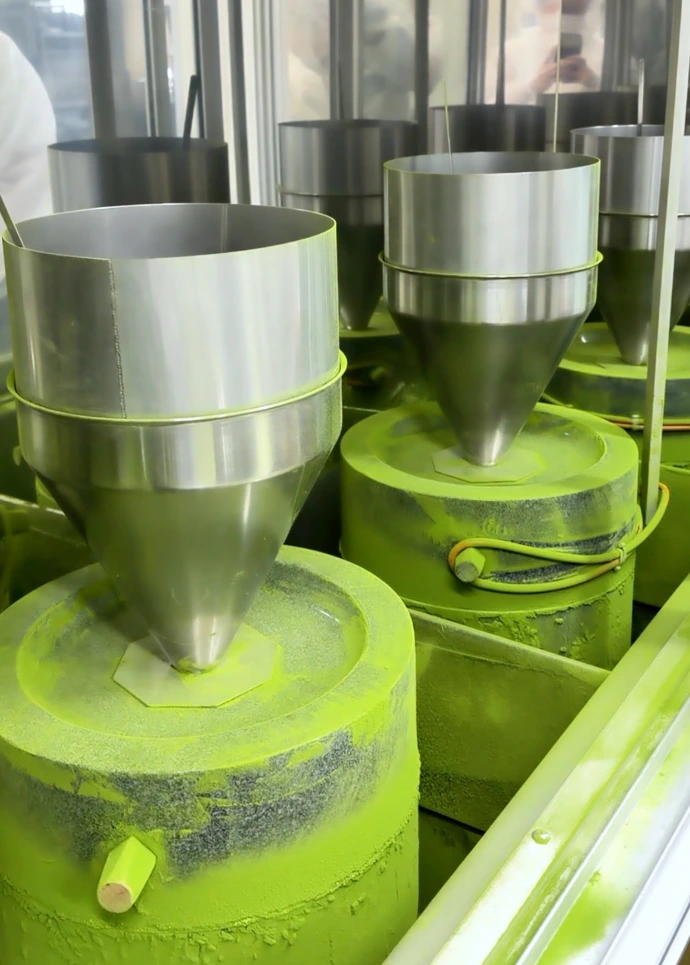
And that’s how KOKUMAMI happened.
My parents always taught me that if you decide to do something, you should do it with absolute conviction.I think that principle probably explains KOKUMAMI better than any brand statement could. And by the time I needed a name, the flavour profile I kept coming back to was already obvious.
Koku is about richness, body and depth. Umami is the flavour I keep chasing. Together: KOKUMAMI.
And by now you already know: I’m very picky about umami.
Yours,
Laura
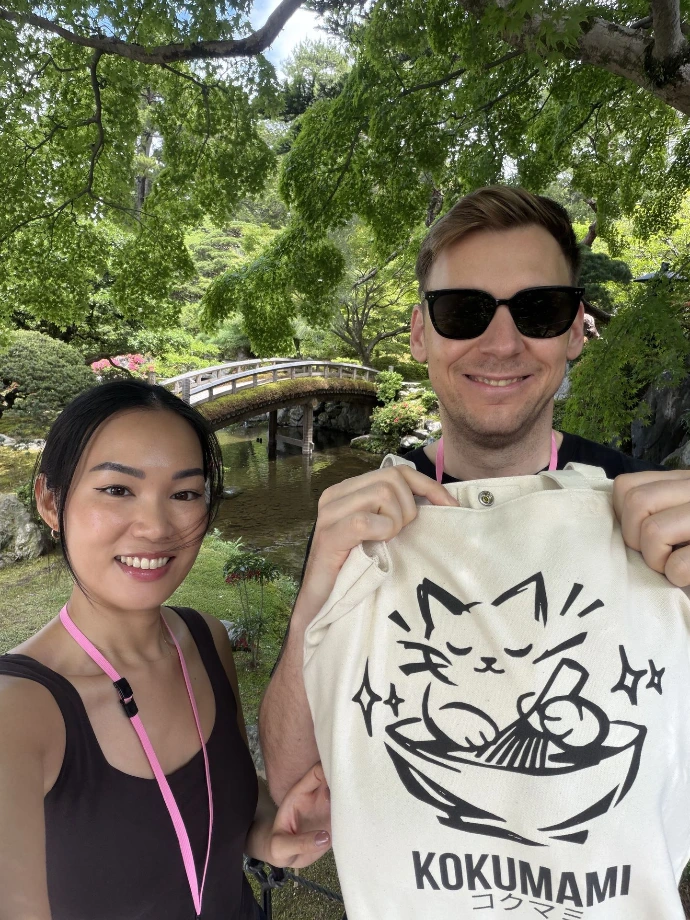
P.S.: Oh, and the white guy in this picture here? That’s my husband! Someone has to do KOKUMAMI’s accounting. ;)